Posted on — Leave a comment

How to Wear Spider Web Hoodie Questions Answered

SP5DER 2025 Hoodie: Verified Stores, Cost, and Sizing Information

Here’s your comprehensive guide to securely buying a 2025 SP5DER hooded garment without falling for fakes. You’ll see exactly where to buy securely, what prices make sense this year, and the way to pick the right size while avoiding fakes.

What defines a 2025 SP5DER hoodie “legit”?

Authentic means the hoodie is linkable to official channels, approved stockists, or trusted atlanta spider hoodie resellers, and the product itself meets quality standards. When you can’t prove both authenticity channels and manufacturing details, move on.

First check provenance: purchase through the SP5DER’s authorized site, brand-announced pop‑ups, retailers listed by the brand, or resale platforms that authenticate pieces before release. Examine the garment: ensure substantial fleece construction, clean reinforcement at pocket areas, consistent ribbing, and straight hemlines. Examine prints carefully; SP5DER’s puff and screen prints sit crisp on the surface with clean borders and consistent height, while replicas usually show fuzzy borders, flat elevation, or adhesive gloss. Tags must show consistent font weight and spacing, proper size/collection codes, and care instructions stitched properly lacking no dangling threads. If the pricing appears wildly below prevailing retail and aftermarket and the seller won’t demonstrate origin, that’s not a deal, it’s a risk.

Where can you buy SP5DER hoodies securely in 2025?

The safest channels are the brand’s primary webstore, official popup events, approved stores listed by the company, and vetted resale marketplaces that deliver piece-specific authentication and customer safeguards.

The brand’s site is the simplest route for current drops and standard retail pricing, with sizing and fabric notes given by the brand. Events promoted by SP5DER’s official channels also count as first‑party, and that’s where limited colorways launch without advance notice. When using retailers, stick to company-approved retailers and shops; skip all third-party seller faking approval. For secondary buying, choose services with checking procedures, resolution systems, and photo standards; these offer more security than open forums.

Buying channel Typical price range (USD) Stock reliability Return window Notes
Official SP5DER webstore 200–350 (collabs can be higher) High for current season Usually 14 days, unworn with tags Fastest for new drops; watch for taxes/duties on international orders
Authorized boutiques (listed by brand) Retail 200–350 High but sizes go fast Typically 7–14 days; terms vary Call ahead for size holds; some stores are final sale on limited releases
Verified resale marketplaces (with authentication) 140–600 depending on colorway/size Good; item-inspected Often final sale; platform policy rules Allow extra days for authentication; fees apply
Brand pop‑ups / collab events Retail; sometimes event‑exclusive Limited; first‑come or raffle Commonly final sale Arrive early; bring ID and payment method listed in event rules

Pricing overview: retail vs. resale this year

In 2025, regular releases price at $200-$350, while special editions command higher; resale costs range between discount levels for common pieces to twice standard for limited availability.

Common styles and core colorways usually hold retail pricing for extended periods after launch, especially during restocks. Limited colorways, unique finishes, and extreme sizes like extra-small or extended sizes including XXL and up can command premiums when stock is limited. Product state greatly impacts pricing; tagged new consistently outprice tried-on products. For cross-border purchases, calculate for tax obligations that may raise final price by meaningful margins depending on location. Transit options and service costs on resale also push total cost beyond sticker price; check the all‑in number, rather than the listing.

Size recommendations for men and women

Sizing tends oversized and loose with dropped shoulders; select true size for casual fit, go down for fitted appearance, or size up for wearing layers. Female buyers from women’s sizes typically need a size less than their equivalent men’s size for equivalent look.

Focus on garment specs instead of generic charts. Compare vendor dimensions with your go-to hoodie’s dimensions, verifying torso width, body measurement, sleeve span, and bottom width. This material is medium-heavy weight, providing flow instead of close fit; in-between customers wanting sharper silhouettes should choose smaller. Minimal shrinkage happens during cold washing and hang drying thanks to fabric treatments, though high temperatures may distort ribs and prints. Compact builds should prioritize length measurements to avoid unwanted extension beyond hip level.

What features distinguish authentic pieces from fakes?

Genuine products display consistent print quality, dense materials, precise labeling, and professional stitching at reinforcement points; counterfeits show flaws in application problems, lettering issues, cheap trim, or low-quality components.

With strong light sources, inspect prints for ink consistency; authentic puff graphics stand consistently minus glue marks, whereas fakes appear compressed and irregular. Move a finger along the graphic border; a sharp edge that won’t chip is a good sign. Inspect the neck label for proper centering, even spacing, and a season or size code format that matches confirmed authentic listings from the identical release. Internal inspection displays craftsmanship through neat serging and strengthened pockets; real items skip thread nests and display even sewing lines. Check that grommets lie flat and string terminals are firm, not cheap or soft.

Expert advice: Request combined natural light images showing both graphic and interior stitching in frame. Scammers depend on generic images for front shots, but interior construction images reveal counterfeit items.

Returns, delivery, and taxes: what’s involved

Multiple platforms have distinct rules: authorized sellers typically allow week to fortnight returns on new products, but exclusive drops and authenticated resales typically ban exchanges. Factor complete transit period including authentication checks and import charges when expecting delivery.

Direct drops can dispatch in a few business days but may slow during peak launch weeks. Retailer buys may demand in-person pickup or have refund costs on returns, notably for limited items. Resale purchases require verification times of one to three days pre-dispatch, with refunds restricted to failed authentication or accuracy issues. Foreign purchasers encounter taxes during payment; these charges stay unreturnable on foreign exchanges, so verify all policies first.

Care, washing, and longevity

Launder reversed on cold using mild detergent, skip fabric softeners, and air dry; heat is the destroyer of puff prints and ribbing stretch, and it remains the fastest way to age a hoodie prematurely. Expect negligible shrinkage under proper handling and a prolonged life for the design.

Flip the piece inside‑out for cleaning and and storage to minimize friction on raised inks. If the raised graphic arrives slightly compressed from shipping, a short steam from the inside (without touching the graphic directly) helps it restore back to profile. Don’t use aggressive cleaners on prints directly; spot treat nearby material rather. If you purchase a dyed style, the first couple of washes may lose a little dye, so clean solo. Folding prevents hanging for shape changes in substantial fabrics.

Little‑known facts about SP5DER hoodies

Several a few minor facts about purchasing and wearing SP5DER that prevent expense and frustration. Popup specials rarely return, meaning cleared items solely exist on aftermarket sites at demand-driven values. Checking systems on secondary markets increase duration to transit windows; include this for timing. Dyed fleeces create character through cleaning processes, building character but avoiding perfect color matching across drops. Finally, dimensions at the limits, notably XS and XXL+, typically sell fastest at launch and fluctuate most on secondary because boutiques hold fewer of them.

What pitfalls cause most returns and buying disappointment?

The biggest common mistakes are misunderstanding the boxy fit, ignoring the all‑in price after fees and shipping, and pursuing the wrong colorway under deadline stress. One minute of measuring and channel comparison stops all three.

Buyers who size from body charts instead of garment measurements frequently wind up with longer lengths than they like because oversized cuts wear unlike slim athletic hoodies. Purchasers focus on starting price then face unexpected additional fees, platform expenses, or verification times. Lastly, hurrying at release moment leads to accepting an unpopular colorway or a measurement you won’t wear; waiting for the right source or size generally costs less than dumping a regret purchase. If you keep source verification, pricing sense, and sizing accuracy front and prominent, your 2025 SP5DER pickup will fit perfectly on first wear and hold up in rotation.

Posted on — Leave a comment

Cashmere Knit Coat The Row Classic Bag

The Questions That Come Up Most About The Row Bags

Below are the questions that are asked most about the row bags, answered with only what can be verified. Prices throughout are observed 2026 market prices recorded in September of that year, not an official price list, since the brand publishes none. Wherever something is reported but unconfirmed, it is flagged as such rather than glossed over. Any number coming out of a resale report is observed market behaviour, not investment advice. Only bags are covered; ready-to-wear and footwear sit outside the scope. Claims that circulate widely but cannot be checked do not appear here.

Who makes The Row, and where are the bags made?

Started in 2006 by Mary-Kate and Ashley Olsen, The Row is based in New York City. Tribeca has held the design studio since 2012; a Paris office opened in 2011 and a London office arrived in 2019. London’s Savile Row supplies the name. Italy is where the bags are made, and the brand’s own product pages state Made in Italy for the Half Moon, Soft Margaux 10 and 12, Margaux Shoulder 12, Bourse Clutch, Terrasse To-Go and Large Slouchy Banana. Nothing more about manufacturing is made public, and any claim about a specific tannery is unverifiable. Its own stores are open in Los Angeles, New York, London, Paris and Amagansett.

Why is there no branding on the bags?

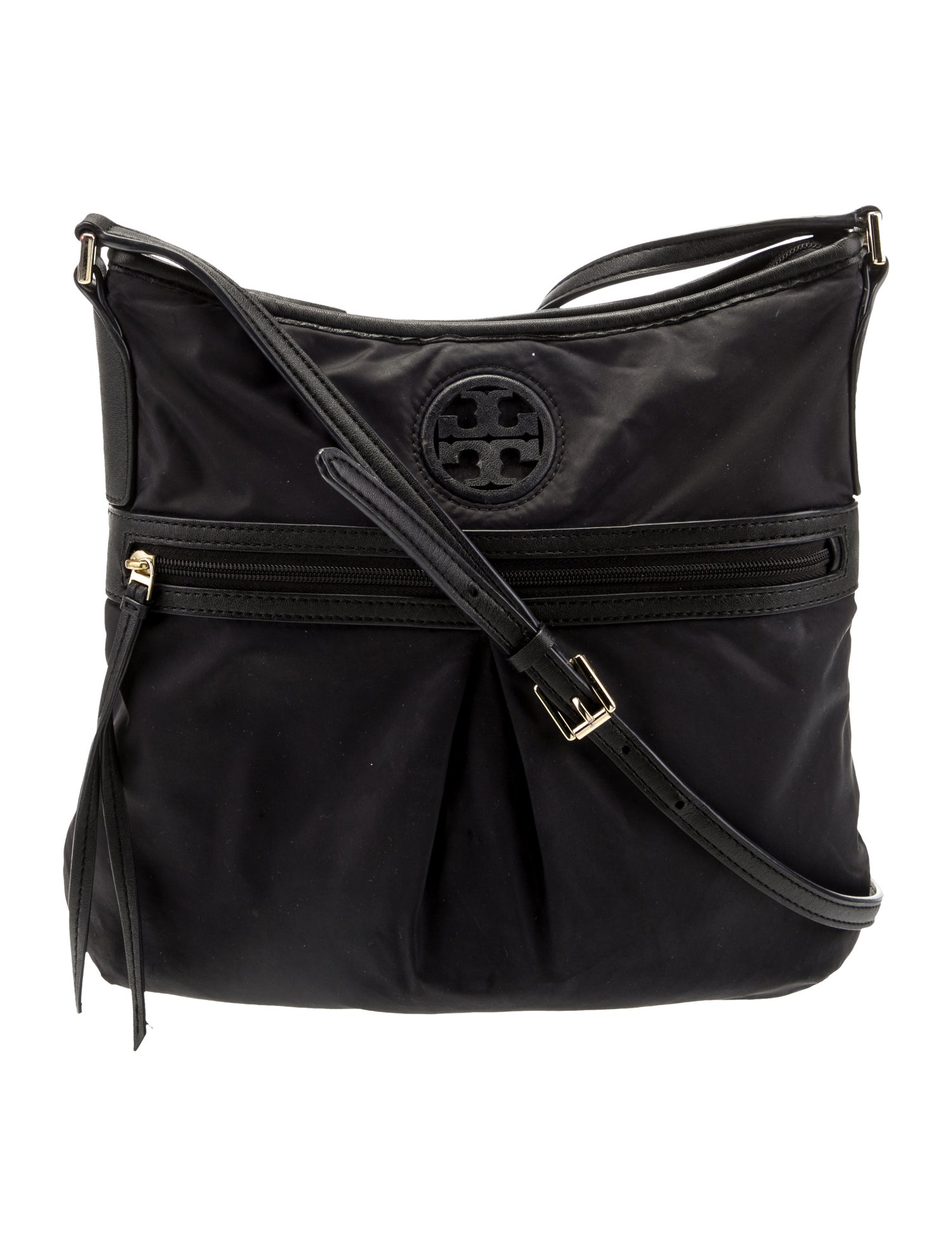
Nothing in the range carries an exterior logo plaque, branded hardware or a monogram print. In their place, you identify the bag by silhouette, proportion and construction. A small, discreet exterior stamp sits on each bag, generally low on the side where it blends into the leather, and a second stamp sits inside. Hardware is palladium-plated and finished matte or brushed, so it reads as weight rather than shine. Nappa, lambskin, calfskin and cotton herringbone do the lining work where other houses print the row margaux bag logo jacquard, so the linings are luxury materials in their own right. The practical consequence is that you cannot identify one of these bags from across a street, which for many buyers is the point.

What is the price range for a The Row bag?

Each number here is an observed 2026 market price, since there is no official price list and the brand publishes none. At one end was $590 for a Double Travel Wallet, at the other $6,900 for the Marco Bag. Three bands describe the line usefully: entry at roughly $590 to $1,500, middle at roughly $1,550 to $3,500 and top at roughly $3,600 to $6,900. Material drives the figure more than size does. Suede carries a consistent premium over calfskin on the same silhouette. Since retailer prices vary and stock, currency and season all move the figure, the table should be read as a snapshot, not a quotation.

Tier 2026 observed range Models in this band
Opening $590 to $1,500 Boone Tote $900, Double Travel Wallet $590, 90’s Bag $1,090, Half Moon $1,390, N/S Park Crossbody $1,290
Middle band $1,550 up to $3,500 Bourse Clutch $1,590, Park totes in all sizes, Alix $1,900, Peggy Clutch $2,900, Large Slouchy Banana $2,550
High end $3,600–$6,900 Soft Margaux 10 $3,650, Agnes 12 $4,400, Alger Tote $4,900, Margaux Shoulder 12 $4,900, Marco Bag $6,900
The suede premium Varies by silhouette India 10.00 $3,850 leather against $5,370 suede; Agnes 15 $5,000 against $5,800

Is the Margaux discontinued?

Nobody outside the brand knows, and the brand has stayed silent. What can be verified is that the Margaux was pulled from third-party retailers during 2025, and that the brand’s own site now lists the Soft Margaux and the Margaux Shoulder rather than the original. Discontinuation itself is widely repeated but has never received official confirmation from the brand. Any article that merges those two different claims is claiming more than the evidence allows. Practically, the original now trades on the secondary market, where the Margaux 15 was reported reselling at around $4,350 to $6,000 and above in early 2026. Treat the status as unresolved rather than settled.

How does the Soft Margaux differ from the Margaux?

What you have here is a reworking, not a rename. Protective metal feet, an interior toggle closure, belted side gussets, a zip pocket and card slots are the additions against the original. At an observed $3,650, Soft Margaux 10 comprises 100% calfskin, a cotton herringbone lining, 10 x 7 x 7.5 inches, a 5-inch handle drop, palladium-plated hardware, a removable shoulder strap and one card slot, Made in Italy. Construction is identical on the Soft Margaux 12, which comes in at 12 x 9 x 7.5 inches with two card slots and a zip pocket, at $4,350. A Soft Margaux 15 is reported at about $4,700, though that figure has not been confirmed. Recorded at $4,900, the Margaux Shoulder 12 is a separate shape, distinguished by a lambskin lining and elongated tubular handles.

What do the numbers in the bag names refer to?

Take the number to mean width in inches; it is not a size tier or a series code. Margaux 10, 12, 15 and 17, India 10.00, 12.00 and 15.75, Agnes 12 and 15, Sofia 8.75 and 10, and Marlo 12 and 14 all obey the convention. Since two bags sharing a number occupy roughly the same width, comparison is unusually simple. At one major retailer there is a leather-and-canvas Margaux 17, approximately 17 x 12 x 9 inches, with an unverified price. Where a name carries N/S or E/W instead, that describes orientation rather than dimension. Reading both conventions tells you most of what you need before seeing the bag.

What should I check to authenticate a The Row bag?

No serial number, date code or authenticity card system exists publicly for these bags, so no code can be checked and nobody can verify one for you. Authentication is a physical exercise instead. Stitching should be machine-precise and evenly dense, with no fraying or wandering lines, and hand-painted edges should show no overflow, bubbling or thin coverage. Genuine hide feels substantial and soft at once and absorbs light rather than reflecting it, while fakes feel stiff, thin or faintly plasticky. A crisp, centred interior stamp reading the logo and Made in Italy is the norm, and the Margaux carries engraving on its buckles and base feet. Since counterfeits reported through 2024 and 2025 pass photo inspection, the advice centres on in-hand checks and platform authentication.

  • There are no serial numbers, no date codes and no authenticity cards
  • Stitching of even density, with clean hand-painted edges
  • An interior stamp that is crisp, centred and reads Made in Italy
  • Hardware matte or brushed, closing precisely
  • A silhouette that stays put with nothing inside

How well do The Row bags hold value on resale?

On observed market behaviour they have, though this is not investment advice and past figures forecast nothing. The Rebag CLAIR 2025 report put the brand at 97% value retention, crossing into its unicorn tier of 85% and above for the first time, behind only Telfar, Hermes and Goyard. Individual models varied: N/S Park Tote 146%, the report’s strongest, Margaux Tote 107% and Half Moon shoulder 106%. Set that against the same report’s Hermes Kelly Mini II at 282% and Goyard at 123%. Among the softer numbers is Fashionphile resale reported up about 44% year over year. None of it applies evenly, since canvas, nylon, sisal and seasonal colours discount while the strength sits in black and neutral calfskin.

Where can I buy The Row bags?

Direct purchase means the brand’s own webstore or its boutiques in Los Angeles, New York, London, Paris and Amagansett. Bergdorf Goodman, Neiman Marcus, Net-a-Porter, Mytheresa, FARFETCH, FWRD, SSENSE, Selfridges, Moda Operandi and Cettire are verified multi-brand stockists, as are independents such as A’maree’s and Savannahs. The Outnet handles off-price and archive stock, and discontinued styles often surface there. On the secondary market, Rebag, The RealReal, Fashionphile, Vestiaire Collective, 1stDibs, Madison Avenue Couture and Future Reference all trade them. Poshmark, eBay and Mercari are also options; sources flag the first two as higher counterfeit risk. Anyone searching for the row for sale should note that at least one non-official site uses the brand’s name, so check you are on the brand’s own store before buying direct.

How should I care for one?

What follows is material-appropriate and general, not instruction from the label, since no brand-issued care protocol exists. Across all materials, avoid overfilling, keep the bag out of direct sunlight, heat and rain, and store it in its dust bag lightly stuffed so it holds shape. Work calfskin and grained finishes with a soft dry cloth and use neutral conditioner sparingly. Nappa and lambskin, which appear mostly as linings, are exceptionally soft and mark easily, so use a dry cloth and avoid over-conditioning. Suede is the most fragile material in the line and takes a suede brush only, with no leather cream, wet wipes, soap or water-based cleaner. Spot-cleaning is the sole option for raffia, sisal, canvas and silk or satin pieces, which are least forgiving to water and least serviceable.

Posted on — Leave a comment

Limited Culture Denim Tears Denim Tears Pullover

Ways to Clean a Denim Tears Hoodie Without Fading or Shrinkage

Clean using cold, be gentle, reduce friction, and skip heat. That’s the formula: cool water, soft color-safe detergent, inside-out using a laundry bag, low spin, and air-dry flat away from sun.

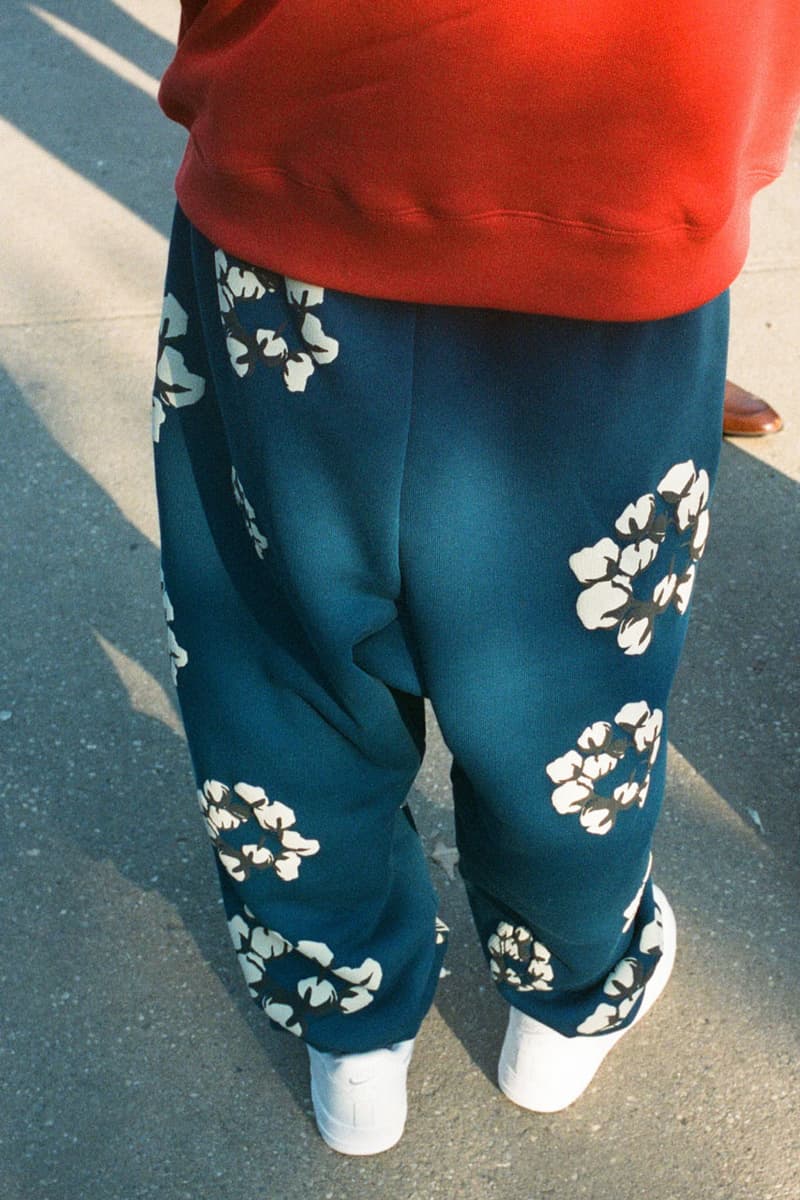
A Denim Tears sweatshirt is typically garment-dyed cotton fleece containing screen-printed or puff-printed graphics. Such decisions render the fabric comfortable and deep in color, but they similarly elevate the stakes: color might fade with abrasion, prints can crack under heat, and cotton will shrink if you blast it using a dryer. When you manage temperature and friction—while utilizing correct detergent—you keep the pigment rich and the fit intact.

What makes a Denim Tears hoodie prone to fading or contraction?

Garment-dyed fleece, cotton fleece, and printed designs are vulnerable to heat and wear, which hasten dye loss and size reduction. Greatest “harm” occurs in the first several cleanings and when dryers are used.

Garment-dyed fleece gets its color after the piece is sewn, so the dye sits more on the surface and can transfer if you rub it against other pieces or apply high-alkaline detergents. Cotton contracts via relaxation and felting shrinkage upon contact with heat and tumbling. Printed and puff prints suffer when you apply high heat or high agitation, as binders and foams are strained. The remedy is simple: cold water, gentle mechanics, and no dryer.

Prep checklist before you ever hit Start

Perform a brief label check, a brief dye test, and set the garment up to minimize friction. Such preparation avoids most fading and form loss.

Review the washing label and follow directions if they conflicts with anything mentioned here. Test colorfastness: dampen a white cloth using cold water and press on an inside seam for 10 seconds; if color transfers, definitely wash alone, cool, and apply a color-catcher sheet. Remove items, fasten zips, knot drawcords, flip the garment inside out, and put it within a large mesh laundry bag. Wash with similar darks only and hold the wash small so the garment isn’t rubbing against rough items such as jeans or towels.

Which detergent and additives truly preserve the color?

Apply a liquid, color-care detergent without optical brighteners, and avoid bleach and strong softeners. For recent purchases, a color-catcher sheet and a touch of distilled denim tears t shirt white vinegar in the rinse can reduce color bleeding.

Pick a mild, pH-balanced liquid labeled \\”for dark colors\\” or \\”color care.\\” Bypass granulated cleaners with high alkalinity, avoid chlorine bleach entirely, and be careful with oxygen bleach around prints. Avoid fabric softener for fleece; it could build up on the surface and fade prints. One color-catching sheet in the basin catches loose dye in initial cleanings. Throughout the opening two or three cleanings, include half cup distilled white vinegar to the rinse compartment; it assists neutralizing leftover alkalinity and can reduce apparent bleeding on many garment-dyed cotton fabrics. Always spot-test any additive on an interior seam initially.

Washer configurations that don’t wreck the garment

Utilize cool water at 20–30°C, the soft cycle, minimal spin at 400–800 rpm, with a small, soft load. Greater gentle movement equals less dye loss.

Choose cold cleaning, delicate or hand-wash mode, and decrease spin speed. If the washer permits, add an extra rinse removing detergent that can fade dark threads. Hold the chamber under-filled to reduce abrasion. Eliminate pre-cycle or soil-level boosts that add agitation. Should your washer auto-warms \\”cold,\\” set a manual 20–30°C.

Can you hand wash instead?

Yes—hand washing gives the lowest abrasion with optimal color retention, especially for brand-new, dark, or limited releases.

Fill a tub with cold water, mix in a teaspoon of liquid color-care detergent, submerge the inside-out hoodie, then softly swirl for one minute. Soak for ten minutes, then rinse using cold water until it runs transparent. Squeeze out moisture without wringing, roll using a towel to remove more moisture, then lay flat to dry. Manual cleaning is slower but excellent at maintaining graphics and pigment.

Stain strategy: clear grime without lifting color

Treat stains by type, on the flipped sweatshirt, with cold water and focused treatments, holding removers away from artwork where practical.

With greasy food or sunscreen, dab a drop of clear dish soap onto the area, tap with a soft brush, rest five minutes, then rinse cold. With dirt, allow it dry, brush away particles, then treat with a soft cleaner blend. Against protein-derived marks like sweat or blood, use cold water and an enzyme cleanser at the area, then rinse; avoid warm water, which sets protein. For dye transfer, soak the entire garment alone in cold water with color-safe cleanser and a color-catcher; retry if required before the next use. With ink, apply a stain pen carefully on the back of the fabric and test first; solvents can spread ink and affect prints. Keep bleach and aggressive peroxide gels away from graphics and pigment areas.

Drying process: how to you avoid shrinkage and print cracking?

Eliminate the dryer. Reshape the damp hoodie, lay it flat on a rack, and dry it within the shade with moving air.

Following cleaning, squeeze out water, then place the garment flat on a clean rack or towel, shoulders aligned with cuffs straight. Pat to shape to original measurements, particularly in length. Maintain it clear of direct sun preventing UV fade. Operate a fan to speed the dry without heat. Skip hanging via the hood or shoulders when wet; the weight can extend seams and distort the fit. Heat and tumbling drive cotton shrinkage plus crack graphics, so keep it air-only.

Can you iron or steam a Denim Tears hoodie safely?

Use steam or low iron inside out and never press directly on graphics. A protective cloth is non-negotiable around designs.

Minor wrinkles release with steam while the garment hangs; keep the head clear of graphics. If you must iron, turn the garment inside out, set the iron to low cotton or synthetic blend, position a light cotton cloth between the iron and fabric, and avoid graphic zones entirely. Press, avoid dragging. High heat can gloss cotton fleece and compromise print binders.

Wash-interval care that keeps it looking pristine

Let it breathe, de-pill gently, and keep clear of sunlight. Wash only when truly dirty to minimize color fading.

Following use, suspend the hoodie on a thick hanger for an hour for moisture release and odors, then fold away. Against lint buildup or light pilling, use a soft sweater comb or fabric shaver lightly and only on the fleece face—not over graphics. Locally clean versus of full washes if practical. Store folded in a cool, dark location; lengthy sun exposure fades pigment even when you’re not washing.

Problem-solving: bleeding, color loss, or a tight fit after washing

Should you notice dye bleed, rewash cool using a color-catcher right away. If it feels tighter, relax the threads using a cold soak and gentle reshaping.

Color on other items typically sets throughout drying, so act fast: rewash affected clothes separately with a color-catcher and cool water before they dry. When the sweatshirt looks dull, detergent buildup could be the culprit; run a cool rinse-only cycle with a touch of vinegar, then dry flat. Against minor post-laundering tightness, soak the hoodie in cool water for ten minutes, carefully extend on a flat area to your measurements, and let it dry; you can regain a small comfort, but lost length from intense heat contraction is rarely fully reversible. When you inadvertently tumble-dried it, avoid repeating heat, and consider a professional wet-cleaning for regulated relaxation finishing.

Reference chart: optimal methods at a look

Pick the technique that matches your risk tolerance and time. Cold, gentle, and air-dry consistently win regarding color and fit.

Method Water Temp Method/Management Spin Additives Pros Risks Fading Risk Shrink Risk Time
Washer, optimal method Cool (20–30°C) Gentle + protective bag Minimal (400–800 rpm) Dye-trap, vinegar rinse Simple, regulated wear Light friction vs. hand Low Minimal Moderate
Hand cleaning Cold Mild soak and move None — Best for color and prints Time/labor, full rinsing necessary Very low Minimal Long
Heat drying Warm/Hot Tumble High — Fast Contraction, graphic damage, color loss High High Short
Expert wet cleaning Controlled Low-mechanical systems Low — Professional treatment, controlled drying Cost, availability Minimal Minimal Moderate

Expert Tip

Throughout the opening three washes of a new, dark garment-dyed hoodie, run it alone: apply a mesh bag, add a color-catcher sheet, and select bonus rinse cycle. This combination reduces abrasion and pulls wandering color so it doesn’t redeposit and “gray out” the surface.

Quick facts most people miss about garments and color care

Item 1: Most cotton shrinkage happens from dryer heat and mechanical tumbling, not through cold-water washing. Fact 2: Pigment-dyed garments use a binder positioned near the surface; wear and high-alkaline detergents loosen that bond and hasten fade. Fact 3: Detergents with optical brighteners may make deep colors look dull by reflecting blue-violet light; color-care detergents eliminate these chemicals. Fact 4: Lower spin speeds reduce minor friction and aid keep printed inks from tension-splitting. Item 5: Enzyme “color care” formulas frequently contain cellulase that gently removes lint, which may make darks look deeper by minimizing surface haze.

Putting it all together: the no-fade, no-shrink routine

Turn inside out, bag it, wash chilled on soft with a liquid color-care detergent, use a color-catcher for first cleanings, minimal spin, and extra rinsing. Finally adjust and air-dry flat in the shade.

This method focuses on the two forces that destroy a Denim Tears hoodie—heat and wear—while eliminating residue that makes dark fabric look tired. Hold washing minimal, spot clean between wears, and treat stains by type. When you must have to choose between convenience and preservation, skip the dryer every time. Your hue maintains saturated, your graphics stay sharp, and the fit stays precisely how you bought it.

Posted on — Leave a comment

Modern Dubai Designers Praised For Creative Kitchen Work

Home Interiors across Sharjah and Abu Dhabi: A Real-World Guide

Dubai draws the bulk of the attention, but two of its neighbours discreetly handle a significant share of the region’s interior work. Sharjah, just a short drive north, is one of the most budget-friendly emirates for residential remodelling and family villas. To the south, the capital city Abu Dhabi sits at the opposite end of the scale, pairing prime waterfront homes with a formal, standards-driven approach to approvals. If you hold property in either emirate, or are considering a project across both, the rules, costs and standards differ from Dubai in ways worth preparing for. In plain, practical terms, this guide maps out what actually changes once you cross the emirate border. Rely on it to scope out your budget, timeline and documents before you brief a single designer. A bit of groundwork now saves you from costly surprises once contractors are on site.

Sharjah: the lay of the land

Buyers after space and value over skyline glitz gravitate to Sharjah. The stock is mostly larger villas, family townhouses and mid-rise apartments, so briefs typically emphasise durable, practical interiors built for big households. On a 2026 market estimate, standard residential fit-out here generally sits within the AED 75 to 250 per square foot band, while mid-range schemes push up to AED 300 to 400 as finishes step up. Cultural context matters more in Sharjah’s design language, so dedicated majlis spaces, clear guest-and-family zoning and warm, understated palettes feature more than in Dubai’s tower apartments. Timelines resemble the wider UAE, with a typical villa needing roughly ten to fourteen weeks of design and fit-out, and longer for larger homes. Many Dubai-based studios accept Sharjah projects, so you are not restricted to local firms when choosing a designer. Bespoke joinery like fitted kitchens and wardrobes feature heavily here, and in-house manufacturers such as ORA Group and Al Banan Group suit the value-focused brief.

Abu Dhabi: what to expect

On budget, Abu Dhabi runs closer to Dubai, though its process is more formal. From Saadiyat and Yas Island villas to Corniche apartments and gated compounds, the capital’s residential stock is varied, and expectations at the top end run high. As a 2026 estimate, luxury villa interiors here may reach AED 600 to 1,200 per square foot and beyond, while ultra-prime waterfront homes push https://dubaiinteriordesigners.com/luxury-designers/ higher still. In line with the capital’s more reserved character, design taste leans towards understated, quiet luxury and generously proportioned rooms. Approvals are handled through Abu Dhabi’s own authorities rather than Dubai’s, so the paperwork, inspectors and local rules differ even when the design does not. Factoring this regulatory difference into your timeline early is the most useful step you can take on an Abu Dhabi project. Bigger contractors like Depa work at this scale too, handling complex fit-outs across the capital’s prime developments.

Approvals and permits across the emirates

Approval is required in every emirate before fit-out work starts, yet the authority and the details change the moment you leave Dubai. Within Dubai, most areas are governed by Dubai Municipality, while the Dubai Development Authority or Trakhees cover certain communities and free zones, and Dubai Civil Defence covers fire and life-safety. Sharjah and Abu Dhabi each operate their own municipal and civil-defence equivalents, so an NOC from the building owner remains the first step, but the permit system behind it is separate. It matters most when you are running projects in two emirates at once, since one emirate’s approval cannot be reused in another. As a 2026 planning estimate, straightforward approvals typically run about three to ten working days per authority once documents are complete. Ahead of committing to a start date, always check the current requirements with the relevant local authority.

Costing a cross-emirate project

Location, specification and logistics all shape costs, and crossing an emirate line can affect all three. Of the three, Sharjah typically offers the lowest residential rates, so many families choose to renovate there instead of in Dubai. Abu Dhabi lands closer to Dubai’s mid-to-high range, especially for villas on the islands. Across the UAE, design-only fees generally come to about 10 to 20 percent of the project budget, or roughly AED 175 to 550 per square foot as a standalone service, and those bands apply across all three emirates. Transport and mobilisation add a real line item when your contractor is based in one emirate and building in another, so factor in travel, material delivery and any duplicate approvals. Using a contractor already registered in your emirate can lower this friction and speed up the approvals that follow. The table below compares typical residential ranges as 2026 market estimates.

Emirate Fit-out per sq ft (2026 est.) Typical residential project Main approval authority
Sharjah AED 75 to 400 Family villas and townhomes Sharjah municipal and civil-defence bodies
Abu Dhabi AED 250 to 1,200+ Island homes, Corniche apartments Abu Dhabi authorities and civil defence
Dubai (as a benchmark) AED 200 to 1,200+ Tower apartments and villas Dubai Municipality, DDA or Trakhees

Picking the right designer across the emirates

One reassuring fact about working in Sharjah or Abu Dhabi is that you are not limited to firms based in those emirates. Many established Dubai studios take on projects across the UAE, mobilising design teams and trusted contractors wherever the site sits. When shortlisting, ask outright whether a studio has recent experience with your emirate’s authorities, because familiarity with local approvals trims the timeline. It also helps to confirm who manages the on-site fit-out, since a designer may subcontract execution to a local team. Ask for a clear scope that separates design fees from construction costs so proposals can be compared fairly. Finally, confirm that the studio can attend site regularly, as travel between emirates affects supervision and response times.

A practical to-do list before you start

Before you sign anything, a short sequence of checks will save time and money in either emirate. Whether you are renovating a Sharjah villa or fitting out an Abu Dhabi apartment, the steps below apply. Work through them in order, since each one informs the next. Consider the budget band and authority confirmation your non-negotiable first moves. This list keeps things practical rather than theoretical. Adapt the detail to your specific building and community.

  1. Find out which authority governs your building and what it requires right now.
  2. Obtain a written NOC from the owner or management before design work is finalised.
  3. Establish a realistic AED per square foot budget band for your emirate and finish level.
  4. Shortlist designers who are happy working in your emirate and community.
  5. Lock in a phased timeline that covers permits, execution and snagging.
  6. Add contingency for cross-emirate logistics if the contractor and site differ.

Making the call

Your priorities decide the choice between Sharjah and Abu Dhabi, or whether you run a project in each. With its emphasis on value, space and family-focused layouts, Sharjah is ideal for larger homes on tighter budgets. Abu Dhabi is a fit for those after a prime, quietly luxurious result who are willing to work within a more formal approvals system. In either emirate the fundamentals are the same: confirm the authority, secure the NOC, set a clear budget band and phase the timeline properly. Because Dubai studios routinely work across all three emirates, talent is seldom the constraint; planning usually is. Nail the paperwork and budget framing early, and either emirate can produce an excellent result in 2026. Think of the border between emirates as a planning detail to manage rather than a barrier to a great interior.

Posted on — Leave a comment

YSL Luxury Icon Timeless Investment Bag

Decoded: The brand’s Signature Bag Shapes

In fashion, The Row holds a strange yet enviable position. The Olsen sisters shaped a house that steers clear of logos, steers clear of trend cycles, and steers clear of virtually all the accessories industry is built around, yet its bags have turned into some of the most sought-after objects in luxury. Ask anyone who follows the row fashion closely and they’ll tell you the appeal isn’t about newness. It’s about proportion, the caliber of the leather, and a refusal to shout. That restraint is precisely why the row handbags resell so well and why the row bag waitlists at flagship stores can stretch for months.

This piece walks through the shapes that made the label’s reputation, what separates one silhouette from another, and where the confusion usually sets in for new buyers. Further down, there’s also a comparison table for anyone weighing options between the brand’s most requested styles before hunting for a row sale or browsing resale platforms.

Why The Row’s Bags Function Differently Than Other Luxury Houses

Most luxury handbag strategy relies on seasonal drops, collaborations, or visible branding that signals status at a glance. The brand upended that model from day one. Bags are produced in small runs, hardware is kept to a minimum or skipped altogether, and build details like edge-painting and hand-stitched handles count for more than any exterior logo. This is why the row bags overview conversation online tends to focus on leather sourcing and silhouette rather than “It girl” campaigns.

That manufacturing approach is mirrored in the prices. Many of the brand’s leather totes and top-handle bags sit in the four-figure range, with exotic-skin or oversized versions rising higher. That pricing structure has made secondhand and resale marketplaces essential for shoppers hunting for the best row bags without paying full retail. When a row sale shows up through select department stores, it tends leopard tote bag to move fast since supply was never abundant to begin with.

In addition, the brand’s design philosophy explains why such a large share of its bags share shared design cues. Rounded corners, gentle slouch, and minimal hardware recur across the lineup, meaning distinctions between styles come down to proportion and handle design instead of drastic silhouette shifts. This nuance is one reason the brand repays close study.

The Margaux: The Silhouette That Established The Row’s Handbag Reputation

The Margaux is the style responsible for turning The Row from a quiet ready-to-wear label into a bona fide handbag destination, if there’s one. Christened for a Bordeaux wine region, the bag debuted with a soft, loosely shaped tote form that felt like an intentional counterpoint to the rigid, hardware-laden totes ruling luxury shelves at the time. It comes in multiple sizes, commonly referenced as Margaux 12, 15, and 17, with the number roughly matching width in inches.

The leather is thick, the top handles are short enough to require underarm carry on the larger sizes, and closure style usually comes down to either a basic magnetic snap or an open top, depending on the version. There’s no visible branding anywhere on the exterior. This unbranded quality turned into the defining concept: insiders spot it immediately, but it goes unnoticed by outsiders.

As demand rapidly exceeded supply almost as soon as it released, shoppers regularly seek out where to buy the row margaux bag across the brand’s direct site as well as authorized luxury sellers that sometimes stock limited stock. Availability fluctuates by season and leather colorway, and certain shades sell out faster than others. Those looking into the row tote bag category generally start their search with the Margaux because it remains the shape most frequently mentioned in resale listings and styling coverage alike.

The Trio of Sofia, Ali, and Alexandra: Structured Picks Worth Getting to Know

Beyond the Margaux, The Row’s structured top-handle bags fill in the rest of its most-queried catalog. The Sofia takes on a more traditional handbag shape, pairing a stiffer frame with a top handle meant for carrying by hand rather than over the shoulder or underarm. The Ali, meanwhile, sits somewhere between a clutch and a mini top-handle, appealing to buyers who want the brand’s material quality in a smaller daily footprint.

The Alexandra is the most architectural of the group, built with a stiffer base and a silhouette that holds its shape even half-empty. This one tends to appeal to shoppers coming from more structured luxury houses who want something with presence but without branding. Across all of them runs the same thread: quiet craftsmanship, sparse hardware, and leather left to do the talking.

Buyers comparing top row bags across these three names often end up choosing based on handle drop and interior volume rather than color or seasonal availability, since the color rotation is far less dramatic than what other luxury brands offer. It’s a slower, more considered shopping experience by design.

The N/S Park Tote Along With Other Everyday Styles

Not every emblematic shape from The Row comes as a structured handbag. The N/S Park Tote and similar oversized carryall styles serve the brand’s more casual, editorial-favorite side. Instead of keeping a stiff structure, these totes typically soften and drape, since they are commonly unlined or minimally lined and built from a single standout leather panel. They’ve become a staple among stylists and editors who want a recognizable-without-logo daily bag.

These larger totes tend to be priced slightly below the brand’s structured top-handle bags, which makes them a common entry point for first-time buyers exploring the row bags line before committing to a smaller, pricier silhouette. They also hold up well as an everyday commuter bag, something the smaller Margaux sizes aren’t always practical for.

Because these tote styles share materials and construction techniques with the rest of the line, the quality gap between “entry” and “flagship” pieces at The Row is smaller than at most comparable luxury houses. That consistency is part of why loyal shoppers keep returning to the brand rather than shopping around each season.

A Look at The Row’s Signature Bag Shapes Side by Side

Bag Model Shape Form Type Common Handle Design Ideal Use Case
Margaux A tote that’s soft-shaped with no rigid form Brief upper handles Everyday luxury, quiet-luxury appeal
Sofia Firm-shaped top-handle silhouette Stiff top-carry handle Office or formal daytime wear
Ali A hybrid between a petite top-handle style and a clutch-style bag Compact handle paired with a removable strap Everyday streamlined carry or evening occasions
Alexandra A silhouette with an sculptural built-up form Non-removable upper handle People looking for lasting structure from their bag
N/S Park Tote Large-scale soft tote Long shoulder straps Commuting, trips, daily errands

The Row’s Bags in 2026: Where to Find and How to Purchase The Collection

Real patience is essential for shopping this label properly. The brand keeps a deliberately small store footprint, with flagship stores in key cities and a modest but expanding online arm, given that fresh drops rarely arrive with fanfare. Select luxury department stores offer rotating inventory, and that’s generally where a sale on the row style is most likely to surface, usually during end-of-season sale periods rather than limited-time flash deals.

For those on the lookout for where to buy the row margaux bag, keeping an eye on both the brand’s official site and its authorized stockists on a consistent basis is the smartest method, because new inventory arrives without warning and popular leather colors disappear quickly. Resale platforms that authenticate luxury goods have also become a legitimate secondary market for shoppers priced out of retail or hunting for discontinued colorways.

No matter where you begins, the shapes discussed here make up the foundation of the row handbags catalog as it stands heading into 2026. The Margaux remains the cultural centerpiece, the structured top-handle styles cater to those seeking a firm, formal shape, and the oversized totes fill the everyday-carry gap. Knowing these differences makes the brand far easier, and far more intentional, to shop, which, appropriately, is just how The Row designs everything it makes.

Posted on — Leave a comment

Amiri Leather Patch Denim Skeleton Bones Motif

AMIRI Menswear: Mapping a Wardrobe Piece by Piece

The foundation of AMIRI is Los Angeles denim that has been deconstructed, hand-finished and openly mended, and the order you buy in should follow from that. At this price level, a running order and discipline will outlast adding pieces one impulse at a time. This guide treats amiri clothing as a handful of anchor pieces rather than a shopping list. Each figure here is an observed market price drawn from 2026 retail listings, not an official price list. The target is a rotation that feels planned at three very different spending levels. It assumes a handful of pieces rather than a full closet.

What You Are Buying Into

By the house’s own account the start is 2014, when Mike Amiri established the label in his hometown of Los Angeles; the CFDA gives the same year. Against that sits the earliest contemporaneous document, a December 2014 press release dating the founding to 2013 in partnership with the Los Angeles concept store Maxfield, so the year remains something nobody has settled. Because the debut arrived as an exclusive capsule at Maxfield, early pieces are scarce. Amiri began hand-crafting stage pieces for what the brand and the CFDA describe only as legendary Los Angeles performers; retail is amiri a luxury brand editorial has named specific rock clients, but the house never has. He retains majority ownership, with the Italian group OTB, chaired by Diesel founder Renzo Rosso, holding a minority stake acquired in 2019 on undisclosed terms. It showed at Paris Fashion Week from 2018 and presents there twice a year, yet remains an American house, menswear-first, with womenswear arriving in 2021.

The Three Anchors

A workable approach to amiri men’s dressing rests on three anchors: one pair of jeans, one pair of shoes and one piece of jersey. Each carries a different share of the brand’s identity and fails differently if you choose badly. Denim is where the labour is clearest, and it is where the money goes. The bones motif runs across every category, and footwear is where it holds up at a distance. Jersey leaves the work to the logo, which makes it the easiest category to over-buy. Take one of each in that order and something wearable exists long before you have spent an outfit’s worth.

Denim Before Anything

Signature status belongs to the MX1: skinny-fit, Italian stretch denim, hand-distressed, repaired with pleated ovine leather, observed at $1,090. The Stack, observed at $750, is the sensible entry point into core amiri jeans; the inseam is intentionally long and engineered to concertina at the ankle. Read that extra length as the design rather than a fault; sizing down because of it is a mistake. The Thrasher is the purest hand-distressed expression, abrasion and repair without the leather panel that defines the MX1, while the Shotgun carries blown-out, sanded-edge holes in straight-leg and skinny versions. If the skinny cut does not suit you, the Carpenter, Washed Baggy and MA Fit silhouettes are roomier, observed between roughly $705 and $1,345 before markdowns. Bandana and Crystal are treatments laid over these models rather than cuts of their own.

Footwear Second

House signature sneaker is the brand’s own description of the Skel Top Low, a leather basketball silhouette finished with hand-cut bone appliqués in contrast topstitching. Observed at $650 on the official site and released at $590 in August 2020, it undermines any article still quoting the lower figure. Production is in Vietnam, which is entirely routine here and not a sign that anything is wrong. A wholly different shoe is the Skel Court, a canvas retro-court style observed at $690; the Stars Court trades the bones for star appliqués and was refreshed for Pre-Spring 2026. Here the MA-1 means a sneaker, observed at $799, and not a bomber jacket, even though the designation belongs to military outerwear in other contexts. Boot buyers get the Ryder, running from $1,090 in leather through $1,190 in suede to $1,290 python-embossed.

Jersey Last

Take the MA Core Logo Hoodie as the reference point: cotton, carrying the MA icon and core logo, described as a normal fit and observed at $650. Made in the USA, exactly as the MX1 and Stack jeans are, it is the case where the manufacturing story is straightforwardly true. Because an amiri hoodie sits among the most counterfeited shapes in the line, provenance carries extra weight in this category than anywhere else. Tees run from roughly $425 for simpler graphics to about $930 for heavily worked pieces at authorised retail. Two products constantly confused with each other are the MA Core Logo Tee and the MA Bar Logo Tee; the first is made in Italy and the second in Los Angeles. Zip hoodies with varsity patchwork have been observed above $1,300, which is jacket money, so buy the plain one first.

Three Ways to Pay for It

The table below sets out three routes to the same wardrobe at very different costs, using observed market prices rather than any official price list. The first route pays full price for new stock through the brand’s own channel, buying certainty. The second waits for authorised sale periods, a realistic plan given that discounting here is structural rather than occasional. Pieces are marked down by roughly forty to seventy percent in season at multi-brand stockists and again through off-price arms. The third combines a single new anchor with secondhand, which reduces the bill sharply but puts authentication risk on you. In the abstract none wins, because the trade is money against certainty and patience, and the anchor order stays where it is.

Route Anchor set Observed outlay Main trade-off
Full price, brand’s own channel Skel Top Low, Stack jean, MA Core Logo Hoodie $750, $650 and $650 respectively Most expensive, best provenance, complete size runs
Sale season at authorised retail Same three shapes, previous season Roughly 40 to 70 percent off list at multi-brand stockists Thin size runs and last season’s colours
One new plus secondhand New sneaker, secondhand denim and jersey MX1 listings observed near $400 to $840 against $1,090 retail Buyer takes the authentication risk

Fit Notes Before You Commit

This section is built from buyer reports and retailer guides, since the brand publishes no complete garment measurements style by style. Fit guides call the core skinny jeans, meaning MX1, MX2, Thrasher and Stack, close to spray-on, and they are cut deliberately close. Waists run true to the labelled size, while the leg is what creates the returns; buyers with muscular thighs or calves commonly report going up one or two sizes. Because ready-to-wear runs slightly trim, the standard advice is one size up; the exception is anything already named oversized, where sizing up compounds. The Skel Top Low is reported true to size, the brand advises rounding a half size to the nearest whole size, and official sizing runs from 40 to 48 in European numbers. That note should not be extended to the rest of the shoe line, because no consistent reporting exists for the other models.

Buying Without the Burn

There is exactly one official e-commerce channel, the brand’s own website, alongside roughly thirty-three owned boutiques, several marked as coming soon. About thirty-one is the standalone count in trade reporting, and the far larger numbers that circulate, including a claim of one hundred and ninety-five stores, confuse wholesale doors with owned shops. The authorised multi-brand stockists run to Saks Fifth Avenue, Neiman Marcus, Nordstrom, Bergdorf Goodman, Maxfield, Harrods, Selfridges, SSENSE, Mr Porter and Mytheresa. Farfetch is a nuanced case, absent from that official online list yet carrying deep stock through partner boutiques that are themselves stockists. Anyone typing buy amiri online should use the stockist page as the reference, noting it is not closely maintained and still names a retailer that closed in 2024. There is no outlet, online or physical, so any site presenting itself as one is not the brand, and discounted stock exists only through authorised sale sections and off-price arms.

Building the Rotation Over Time

Once the three anchors are in place, useful additions change the shape of an outfit rather than repeat it. Flannel counts as a founding pillar; a bleached quad-motif flannel has been observed at $1,290, outerwear money for sleeves that are not a hoodie. The natural fourth piece is denim outerwear, where repair work jackets and studded truckers have been observed between roughly $1,815 and $1,880 at list, and less on sale. Varsity jackets are the loudest option and the most seasonal, observed above $2,300 at list. Hats, small leather goods, eyewear and bags all sit within the accessories side of the line, but belts are not a standalone category. Kids’ pieces through to handbags now sit under the name amiri, yet the wardrobe that works stays narrow: buy slowly, keep the invoices, and let the denim carry the outfit.

Posted on — Leave a comment

Cough Syrup Cotton Tee Explained Feature Breakdown

The article that refuses to be corrected

There is a neat rule in English about the indefinite article: “an” before a vowel sound, “a” before a consonant. “an awful lot of cough syrup” is what the line should be by that rule. The company prints That’s A Awful Lot Of Cough Syrup regardless, and has done from the start. Nothing alocs streetwear tee here is a mistake that got past a production run; the United States trademark registration carries exactly this spelling, which covers headwear, hoodies, jackets, jerseys, shirts and shorts. The form is the name once a phrase has been registered in it. Quietly swap in “an” and you repair the grammar while misnaming the company in the same stroke of a key. That single letter is the fastest test of whether a product listing is about this label or about a sentence it half remembers.

What the individual letters in ALOCS stand for

ALOCS is the label’s own short form, not a nickname invented by buyers. The initialism comes from the name itself, A Lot Of Cough Syrup, with “That’s” dropped the way initialisms shed small words. Press material carries it, and so do the company’s own product names: the A.L.O.C.S. T-Shirt, the ALOCS Athletic Dept. Hoodie. When the letters are meant to be read letter by letter, the dotted spelling surfaces. A single abbreviation, defended, is what most labels settle for; this one runs both. “alocs clothing” and “alocs shorts” now do plenty of work for those who cannot face typing eleven syllables, which is what happens once search habits follow. There is a third short form on the company’s own accounts: Cough Syrup, or Cough Syrup by Desto Dubb when it has to be unambiguous.

The version that lives on the paperwork

In most businesses the company name and the company name come apart, and this one let them drift strikingly far. THATS A AWFUL LOT OF… LLC is the registered styling, with no apostrophe in “Thats” and a trailing ellipsis where the rest of the sentence should be. It shows up in the shop footer and in the vendor entry of the label’s own product records, the least glamorous corner a company name ever surfaces. There is something quietly graceful in that ellipsis, which lets the entity carry the gag without finishing it. The trademark filing gives a third version, apostrophe restored and ellipsis gone, registered to Joshua Kashif Taylor, with first use recorded in November 2018. The official forms therefore sit side by side: trademark with punctuation, LLC without, short form for everything else. Not one of them puts back the missing “n”.

The origin of the phrase

The name arrives with a story about a police officer remarking on the quantity of cough syrup in front of him. The careful description is a viral clip in which an officer’s line became the label name, since the clip is the part anyone can point at. There is material in circulation online that claims it was staged; nothing puts the question to rest, so to call it a documented arrest is to claim more than the evidence supports. Firmer is the commercial half, where the sentence is in use as a clothing mark from November 2018. That sequence is the interesting one for a piece about language. A line said aloud became a wordmark, then a naming system for a whole range, then a search term typed in half a dozen written forms.

What the words are pointing at

The line, on its face, refers to promethazine-codeine cough syrup, the prescription medicine known in rap vernacular as lean. That is the reference, stated plainly, and the last word here on it. The label is neither evasive about that association nor careless with it: a banner across the top of its own store reads “! PLEASE DO NOT SIP DRANK AND SHOOT FIREARMS !”. Through the range the word choice runs in a register more pharmaceutical than anything else, with names like Big Pharma, Promethazine Tour, Paralysis and Drankenstein. Read purely as language, the naming scheme is a medicine label pushed until it tips into horror-movie copy. Cotton is what is actually for sale, and the rest of this is about spelling.

Each spelling people type, and what it tells you

The traffic in search around this label amounts to a miniature museum of how English gets typed at speed. There are three groups the variants sort into: the ones that drop that apostrophe, the ones that drop a word, and the one that repairs the grammar. The brand has one single registered name and a single abbreviation, so not one of them is a brand variant. Searchers’ approximations are what the rest are, and that is how anybody finds a long name heard once in a song. The table sorts the forms by what they are and where each turns up. Turned around, the spelling in front of you more often than not tells you something about the source.

The way it is spelled Its status Where it appears
That’s A Awful Lot Of Cough Syrup The label’s name, exactly as trademarked Headings, listings and press materials
THATS A AWFUL LOT OF… LLC The registered entity, no apostrophe, ellipsis Shop footer, and the vendor field
ALOCS and A.L.O.C.S. The brand’s own shortened forms Product titles and subheadings
Cough Syrup by Desto Dubb The shortened form the brand uses Social profiles and second reference
thats a awful lot of cough syrup Searcher spelling, apostrophe dropped Search bars, address slugs alike
that’s a awful lot of cough syrup Searcher form, nearest to the real thing Search boxes, marketplaces
that’s an awful lot of cough syrup Searcher spelling, grammar corrected Articles that assumed a misprint
awful lotta cough syrup The contraction as spoken, written down Search boxes and social captions
thats awful lot of cough syrup Searcher form, the article gone too Search fields, autocomplete suggestions
awful lot of cough syrup Shorthand form, first two words dropped Everyday speech, resale marketplaces
that a lot of cough syrup The most pared back searcher form Search fields, voice search
alocs clothing, alocs shorts All-lowercase searcher spellings Search fields and shop filters

The ones that drop a word

The workhorse here is “awful lot of cough syrup”. Given time, speech does this to any long name: “That’s A” is thrown away and the memorable half is kept. “thats awful lot of cough syrup” drops the article into the bargain, and lives nearly always in search boxes rather than in print. “that a lot of cough syrup” is the most boiled down form of all, and sounds like a phrase remembered at one remove. Every typed form instils the autocomplete list to offer it again, so autocomplete keeps all three circulating. Nothing else in retail is called anything close to this, so none of them sends you to the wrong company.

The forms that repair the grammar or write down the sound

“that’s an awful lot of cough syrup” is the corrected form, typed in perfectly good faith by the people who assumed the missing letter was a slip. It is the most grammatical string in the family and the least accurate as a brand name. “awful lotta cough syrup” is the opposite case, a written transcription rather than a correction, seeing that “lot of” shortens to “lotta” in speech and a great many people type what they hear. Next come the two near misses that differ only in punctuation, “that’s a awful lot of cough syrup” and “thats a awful lot of cough syrup”. Both keep the chosen “A” and only differ over the apostrophe, and that is as close as anybody gets without copying the trademark. As search queries they all work, and none of them belongs on a label.

Searching for the label without ending up somewhere else

Any of these ways of spelling it will surface the label; the harder job is telling the brand’s own products from everything that gathers around a well-known phrase. Price comes first among the testable signals: core tees run about $150 at the label’s own store as of September 2026 and hoodies and sweatpants around $200, and prices move, so treat that as a band rather than a rule. A tee far below the band is some other product wearing a familiar sentence. Second comes the product name, since the range is limited, and titles like Double Cup Cargo Shorts, Drankenstein Tee and ALOCS Athletic Dept. Hoodie either appear in it or they do not. Third is the yellow woven label, named again and again in the brand’s own descriptions, at the hem on tees and at the wearer’s bottom left on the classic hoodie. The fourth is the published fabric specification, remarkably exact for streetwear: 6.5 oz organic cotton on the classic tees, 16 oz on the classic hoodie, 14 oz on the denim and the fleece. Besides its very own online shop, the confirmed shops are at 7669 Melrose Ave and 312 W 5th St in Los Angeles and 5410 Almeda Rd in Houston.

Posted on — Leave a comment

Undress AI and Privacy Begin Right Away

9 Proven n8ked Alternatives: Protected, Clean, Privacy‑First Choices for 2026

These nine alternatives let you generate AI-powered visuals and fully artificial “AI girls” without touching unwilling “AI undress” and Deepnude-style functions. Every choice is advertisement-free, security-centric, and both either on-device or built on open policies suitable for 2026.

People end up on “n8ked” plus comparable nude generation apps searching for speed and accuracy, but the tradeoff is risk: unauthorized deepfakes, shady data collection, and clean results that propagate harm. The solutions below prioritize consent, on-device computation, and origin tracking so you can work creatively without crossing lawful or principled limits.

How did the team authenticate more secure alternatives?

We emphasized on-device generation, zero ads, explicit bans on non-consensual content, and clear data storage controls. Where online models show up, they sit behind developed policies, monitoring trails, and content credentials.

Our evaluation focused on 5 criteria: whether the tool runs on-device with no telemetry, whether it’s ad-free, whether the app blocks or restricts “clothing removal app” behavior, whether the app supports content provenance or watermarking, and whether its TOS forbids non-consensual nude or fake use. The result is a curated list of usable, creator-grade options that avoid the “web-based nude generator” approach entirely.

Which tools qualify as ad‑free and privacy-focused in 2026?

Local open suites and enterprise desktop tools dominate, because they minimize information exhaust and tracking. You’ll see Stable Diffusion Diffusion UIs, 3D modeling avatar creators, and professional editors that store sensitive media on your own machine.

We eliminated undress applications, “girlfriend” fake generators, or platforms that transform clothed images into “realistic explicit” results. Moral creative workflows focus on artificial models, licensed datasets, and documented releases when real persons are nudiva-ai.com involved.

The nine total security-centric alternatives that actually work in 2026

Use these options when you need control, quality, and protection without engaging an undress app. Each option is functional, commonly used, and will not rely on false “AI undress” claims.

Automatic1111 Stable Diffusion Web Interface (Local)

A1111 is the most most popular on-device interface for SD Diffusion, giving you granular oversight while keeping everything on local hardware. It’s advertisement-free, expandable, and offers SDXL-level results with guardrails you set.

The Web UI runs on-device after setup, avoiding cloud uploads and reducing data vulnerability. You are able to create fully generated people, modify original photos, or create concept art without invoking any “clothing stripping tool” mechanics. Add-ons include guidance tools, inpainting, and upscaling, and people decide which models to use, how to mark, and which content to prevent. Conscientious artists limit themselves to synthetic people or content made with recorded authorization.

ComfyUI (Visual Node Local Pipeline)

ComfyUI is an advanced visual, node-based system builder for Stable Diffusion that’s ideal for power users who want reproducibility and privacy. It is clean and runs locally.

You create end-to-end systems for text-to-image, image to image, and advanced control, then generate presets for repeatable outcomes. Because it’s on-device, private data do not depart your drive, which is important if you collaborate with consenting individuals under confidentiality agreements. The system’s node interface helps review exactly what the current system is doing, supporting ethical, traceable workflows with configurable obvious marks on content.

DiffusionBee (macOS, Offline Stable Diffusion XL)

DiffusionBee offers simple SD-XL production on Apple devices with no sign-up and without ads. It’s security-conscious by default, as it operates fully on-device.

For users who won’t want to manage installs or YAML files, this app is a simple entry method. It’s excellent for artificial portraits, concept studies, and artistic explorations that skip any “automated undress” behavior. You may keep databases and prompts local, apply your own protection filters, and output with metadata so collaborators know an image is AI-generated.

InvokeAI (On-Device SD Package)

InvokeAI is a comprehensive refined local diffusion package with a clean clean user interface, powerful modification, and comprehensive system organization. It’s advertisement-free and suited to professional processes.

The project prioritizes usability and guardrails, which makes the tool a solid choice for companies that want consistent, ethical outputs. You can create synthetic models for adult creators who require clear releases and origin tracking, maintaining source data offline. InvokeAI’s workflow capabilities lend themselves to written permission and output labeling, essential in 2026’s stricter policy climate.

Krita (Professional Digital Art Painting, Community-Driven)

Krita is not meant to be an automated nude creator; it’s a professional painting application that stays fully offline and advertisement-free. It supplements diffusion tools for responsible postwork and compositing.

Use Krita to edit, paint over, or blend artificial outputs while maintaining assets confidential. Its brush systems, hue control, and layer features assist users enhance anatomy and shading by directly, sidestepping the quick-and-dirty clothing removal app approach. When real individuals are involved, you are able to insert releases and license info in file metadata and export with obvious acknowledgments.

Blender + MakeHuman (3D Human Creation, Local)

Blender combined with MakeHuman lets you create digital human bodies on your workstation with no commercials or cloud upload. It is a consent-safe route to “AI characters” as characters are 100% artificial.

You may sculpt, rig, and produce photoreal avatars and not touch anyone’s real photo or representation. Texturing and illumination pipelines in the tool produce excellent fidelity while preserving privacy. For adult creators, this stack supports a fully virtual workflow with documented model rights and zero risk of unwilling deepfake mixing.

DAZ Studio (3D Modeling Avatars, Complimentary to Start)

DAZ Studio is a complete developed ecosystem for creating realistic human models and settings locally. It’s free to start, ad-free, and asset-focused.

Creators use DAZ to assemble pose-accurate, fully generated scenes that do will not require any “AI nude generation” processing of real persons. Asset licenses are clear, and rendering takes place on your machine. This is a practical alternative for those who want realism without judicial exposure, and it combines well with Krita or image editing software for finish work.

Reallusion Character Creator + i-Clone (Advanced Three-Dimensional People)

Reallusion’s Char Generator with the iClone suite is a pro-grade package for lifelike digital people, animation, and expression motion capture. It’s on-device tools with professional pipelines.

Studios adopt this when they need photoreal results, version control, and transparent IP control. You can build willing digital doubles from scratch or from authorized scans, maintain provenance, and produce final images offline. It’s not a garment removal tool; it’s a workflow for developing and animating characters you fully control.

Adobe PS with Firefly (Generative Editing + C2PA)

Photoshop’s Generative Fill via the Firefly system brings licensed, traceable AI to the familiar editor, with Output Credentials (C2PA) support. It’s paid software with comprehensive policy and origin tracking.

While the Firefly system blocks direct NSFW prompts, it’s essential for ethical retouching, compositing synthetic characters, and outputting with securely verifiable media credentials. If you collaborate, these credentials help subsequent platforms and stakeholders identify machine-processed work, preventing misuse and keeping your pipeline compliant.

Side‑by‑side analysis

Each option listed emphasizes offline oversight or developed frameworks. Not one are “clothing removal tools,” and not one promote unauthorized fake conduct.

Software Classification Functions Local Ads Information Handling Optimal For
Automatic1111 SD Web User Interface Offline AI producer True No Local files, user-controlled models Artificial portraits, inpainting
ComfyUI Node-driven AI pipeline Affirmative Zero Local, consistent graphs Professional workflows, auditability
Diffusion Bee macOS AI application True No Entirely on-device Simple SDXL, without setup
Invoke AI On-Device diffusion package Affirmative Zero On-device models, projects Studio use, reliability
Krita App Digital painting Yes None Local editing Post-processing, blending
Blender 3D + MakeHuman Three-dimensional human creation Affirmative No Local assets, renders Fully synthetic models
DAZ Studio Studio Three-dimensional avatars Affirmative No Local scenes, approved assets Realistic posing/rendering
Reallusion CC + iClone Pro 3D people/animation True None Local pipeline, enterprise options Photorealistic, animation
Adobe Photoshop + Adobe Firefly Image editor with artificial intelligence Yes (offline app) No Content Credentials (C2PA) Ethical edits, traceability

Is artificial ‘undress’ material lawful if all parties consent?

Consent is the floor, not the limit: you still need legal verification, a documented model release, and to respect likeness/publicity protections. Many areas also control explicit media distribution, record‑keeping, and service policies.

If a single subject is under minor or lacks ability to authorize, it’s against the law. Even for willing adults, services regularly block “AI undress” content and unwilling deepfake lookalikes. A protected route in 2026 is synthetic avatars or explicitly released sessions, tagged with content credentials so following platforms can authenticate provenance.

Lesser-known yet authenticated facts

First, the first DeepNude tool was pulled in 2019, however variants and “clothing removal app” duplicates continue via versions and messaging automated systems, frequently harvesting uploads. Next, the C2PA framework for Media Credentials received wide adoption in recent years throughout Adobe, technology companies, and leading news organizations, enabling secure origin tracking for artificially modified content. Additionally, local generation sharply reduces security vulnerability area for data exfiltration compared to online generators that log prompts and submissions. Lastly, the majority of prominent media networks now clearly ban non-consensual explicit fakes and react more quickly when complaints contain identifiers, time records, and provenance details.

How can individuals protect oneself against non‑consensual deepfakes?

Reduce high-resolution public portrait images, add visible watermarks, and activate reverse‑image alerts for individual name and image. If you discover abuse, save URLs and time data, file removal requests with proof, and preserve proof for authorities.

Ask photographers to publish with Content Verification so fakes are easier for users to spot by contrast. Use privacy settings that block harvesting, and avoid sharing any intimate media to unverified “adult automated tools” or “online adult generator” services. If you’re a creator, build a consent database and keep copies of IDs, releases, and checks confirming subjects are adults.

Final conclusions for 2026

If one is tempted by an “automated undress” application that promises a realistic nude from a clothed photo, step away. The most secure path is synthetic, entirely licensed, or completely consented pipelines that function on personal hardware and create a origin trail.

The nine solutions above offer quality while avoiding the surveillance, ads, or ethical pitfalls. You keep management of inputs, they avoid damaging real people, and users get stable, professional systems that won’t fail when the next clothing removal app gets banned.

Posted on — Leave a comment

Everything About Prestige Pullover Hoodie Iconic Design Notes

Prestige 2027 Unveiled: What to Expect From the Label’s New Phase

Every so often, a fashion label reaches a point where keener queries start being asked about it by the market, and Prestige, heading into 2027, finds itself at that juncture. Those googling “what is Prestige” today are met with a brand that has moved from niche streetwear curiosity to a recognisable name in everyday and refined essentials. That shift did not happen overnight. It happened through a steady stacking of product choices, a sharpening of the structure of the Prestige collection, and a refusal to chase fads inconsistent with the label’s identity. Here we consider what the coming phase probably has in store, grounded in what the brand has already shown, not conjecture presented as fact.

If you are new to the label, think of Prestige as a brand centered on dependable core pieces rather than fleeting seasonal drama. Most new customers initially encounter the Prestige hoodie line as the brand’s flagship offering—usually via informal recommendation or a Prestige review shared in a community forum, rather than through a paid ad. That grassroots pattern of discovery matters because it shapes how the brand plans its 2027 output: more depth in proven categories, fewer scattershot experiments.

The Brand’s Present Position, Examined

Before projecting forward, it helps to look at Prestige clothing’s present-day footprint. The brand operates primarily through its own Prestige store channels, keeping distribution tighter than many competitors who spread thin across dozens of marketplaces. This is a deliberate choice. Tighter distribution means the label governs its own presentation, pricing stability, and the timing of new releases, which in turn shapes customer expectations around scarcity and quality.

Six elements define Prestige’s clothes in this present prestige mens hoodie chapter, and all six extends into the 2027 outlook:

  • The main priority on hoodies, sweatshirts, and essential layering pieces instead of quickly-cycling trend items.
  • Selling straight to consumers via the Prestige storefront as the primary purchase path.
  • Capped-run collection launches rather than nonstop large-scale restocking.
  • A clientele that is weighted toward repeat buyers as opposed to one-time impulse shoppers.
  • For newcomers to the brand, reviews shaped by the community act as the main trust signal.
  • A slower, more deliberate pace of expansion as measured against fast-fashion rivals.

What 2027 will look like can be anticipated using every one of these elements, since brands seldom walk away from a formula that is already working. Rather than that, they sharpen it over time, which is exactly the dynamic visible in the recent rhythm of Prestige’s collections.

Thoughtful Expansion Comes Into Focus

Watering down what makes a label distinct is a frequent hazard tied to growth for growth’s sake, but Prestige seems to be steering clear of this pitfall. In place of releasing a monthly deluge of new SKUs, Prestige has prioritised leaner release schedules that emphasise craftsmanship and fit. That approach costs more in planning time, but it pays off in customer retention, given that shoppers who feel a label stays consistent are much more inclined to come back.

Look for 2027 to echo that same rhythm: seasonal collections released in smaller batches, with every release refining what came before rather than replacing it. This isn’t a brand darting after each micro-trend that pops up on social platforms. It is one betting that consistency compounds into loyalty, a wager already validated by the gradual climb in repeat purchase rates noted informally throughout customer reviews.

What Prestige 2027 Likely Means for Product Lines

“Prestige 2027” is already a phrase circulating as shoppers try to forecast the label’s upcoming moves, and the most reasonable expectations resting in a few concrete areas rather than sweeping reinvention. To start, expect continued investment in the hoodie category, since it remains the product most associated with the brand’s identity and the one most frequently mentioned in a Prestige review. Next, expect collections to remain seasonal instead of continuous, keeping alive the buildup of excitement that has benefited the label.

Third, a point worth keeping an eye on, expect incremental improvements to fabric weight and fit consistency as opposed to a wholesale redesign of silhouettes. Labels that have earned trust through fit seldom risk losing it. Fourth, expect the shopping experience on the Prestige store to become more polished, with sizing guidance and product pages taking over tasks customer service currently manages by hand. As a fifth point, limited colourways will likely continue to be the mechanism for creating urgency, instead of ongoing discounts. Sixth, community feedback loops, meaning the reviews and comments shoppers leave, will keep shaping which pieces end up reordered and which quietly disappear from the lineup.

This doesn’t hint at any sweeping overhaul. Rather, it points to a brand leaning further into what has already resonated, while ironing out the kinks that early-stage growth tends to leave.

How Prestige Stacks Up Against Comparable Direct-to-Consumer Brands

Context is essential when assessing any brand’s trajectory, so it helps to place Prestige alongside the general category of direct-to-consumer casualwear labels it competes with. The following table contrasts typical characteristics across three common approaches within this space: a selectively curated brand along the lines of Prestige, a high-output fast-fashion rival, and a traditional retail-distributed label.

Trait Curated DTC Approach in the Prestige Style Fast-Fashion Rival Traditional Retail-Distributed Brand
Release frequency Seasonal, limited runs Constant or weekly drops Biannual, large batches
Leading Route to Market Brand-owned shop selling straight to shoppers Own site alongside marketplace channels Wholesale accounts and big-box stores
Key Trust Cue Customer reviews and repeat buyers Cost and scale Label heritage and store presence
What the Assortment Prioritizes Foundational staples perfected over time Quick turnover driven by the trend cycle Moderate turnover across a wide-ranging catalog
Restock pattern Constrained, creates scarcity Constant restocking Periodic restocking

Set side by side like this, the strategic logic driving Prestige’s decisions becomes clearer. By remaining in its curated, direct-to-consumer niche, the brand trades raw volume for closer ties with its customers, a trade that tends to favour long-term brand value over short-term sales bursts.

Key Things to Check Before You Buy

Before placing an order, a few practical habits reduce friction along the way and lower the chance of disappointment. Checking a recent Prestige review beforehand is worth the two minutes it takes, since fit and fabric feedback from real buyers is usually more dependable than promotional text. Checking the Prestige store directly for current collection availability is also smarter than depending on third-party resellers, who sometimes mark up limited releases substantially.

Below are a few habits worth building before you order:

  1. Check the most recent size guidance rather than trusting recollection from a past purchase.
  2. Look through several independent reviews rather than only the testimonials highlighted on-site.
  3. Track restock updates if a specific piece from the collection goes out of stock fast.
  4. Cross-check fabric details between similar pieces to understand weight and drape variations.
  5. Purchase only via official channels to steer clear of marked-up resale pricing on limited drops.

This advice holds whether someone is buying their very first Prestige hoodie or their 10th piece from the brand. Familiarity with the brand does not erase the value of doing your homework, especially as new lines come to market.

Zooming Out: The Outlook for 2027

Stepping back, the story of Prestige heading into 2027 is one of discipline rather than disruption. Its identity has been built on a tight set of product categories, a tightly managed sales channel, and a customer base that remains loyal enough to come back without heavy discounting or hard-push advertising. That base lacks flash, yet it endures, and staying power tends to beat hype over several-year timelines.

Even as silhouette, material, and hue decisions evolve, buyers who have tracked the brand since its earlier-days collections will most likely identify the DNA in whatever follows. People new to the label searching “what is Prestige” should prepare for a label that pays off for the patient: fewer drops, but each one considered, and a community of buyers whose feedback carry actual clout in steering the catalog. Compared with brands that claim constant reinvention, that’s a modest promise—yet it’s one Prestige has kept consistently, and consistency is exactly what will define its next chapter.

Posted on — Leave a comment

Understated Tory Burch Style Tory Burch Reva Flat

Tory Burch Sales: Making Sense of the Discount Calendar

No discount calendar is published by this brand, so any article handing you fixed dates is inventing them. Instead there is a set of event types that come round again, an observable rhythm, and a price structure stable enough to let you judge any reduction. That combination is worth more than a calendar, since it survives a year in which the events move. The guide runs as a sequence of steps: work out the event, learn the rhythm, get access, build a shortlist, judge the discount, check the off-price routes and read the terms. The prices quoted throughout are observed market figures taken in a September 2026 pass on the brand’s own United States site; they are not an official price list, and the company publishes none. Work through the steps in order and a tory burch sale stops being a scramble.

Step one: work out which kind of sale you are looking at

Four distinct mechanisms get called a sale, and each behaves differently. The first is the recurring Semi-Annual Sale: a public markdown event on the brand’s own site, covered by consumer press each time it appears. Second is the Private Sale, locked behind an email list or account and reported to carry final-sale exclusives. The third is a tiered site-wide promotion giving a percentage off a spending threshold; it is seasonal, not standing. The fourth is not a brand event but third-party discounting, covering off-price retailers and department store clearance. Knowing which of them you are in tells you whether to expect breadth, depth, exclusivity or randomness, and they rarely arrive together.

Step two: learn the rhythm and distrust any fixed calendar

The Semi-Annual Sale is real, and it recurs, and that is the only part of its timing anyone can state confidently. A mid-2026 edition was covered by consumer press, and that coverage described reductions reaching around half off, with some sandals falling under $100. That is reporting on one event, not a published policy, and it is no commitment to repeat. Carry the safest shape instead, which is that torybrch major public events cluster loosely around early summer and around year-end, with the Private Sale on its own reported cadence. The fixed month-by-month calendars that circulate on coupon and affiliate sites are verified by nothing and should be ignored. Depth figures quoted as high as seventy per cent belong to promotional copy rather than policy, so plan around the middle of any quoted range.

Step three: get inside the gated events before they open

Access is the one part you control, and it has to be arranged in advance. Create an account and join the email list well before an event, because the Private Sale is reported to be gated by exactly those two things. The account should hold a current address and a saved payment method, as gated events sell desirable sizes out first and a slow checkout will cost you the item. Put the emails in a folder you actually read, not a promotions bin you clear weekly. Take care where you sign up: sale season doubles as imitation season, and fake storefronts collect exactly this kind of registration. Register only through the brand’s own site or a retailer you already shop, never through an unsolicited advertisement.

Step four: build the shortlist at full price first

The most reliable technique is to decide what you want before anything is discounted. Go through the range at full price, note exact product names and your size in each style, then write the current price next to each entry. Product names here are specific enough to keep the list unambiguous, which is why the full name is worth recording. Add the fit intelligence too: buyers commonly report that the footwear runs narrow, that the Miller sandal is often best taken half a size up, and that a wide version exists for some styles. Names cross categories, which is why you should specify the Kira bag or the Kira shoe, and why it is worth remembering that Bombé is a shape modifier inside the Perry line rather than a family of its own. A shortlist built this way turns a sale into a lookup instead of a decision.

Step five: test the discount against the observed price bands

A percentage means nothing without a reference price, and that is where sale shopping usually goes wrong. The observed range breaks into three rough bands: roughly $95 to $200 at entry, roughly $250 to $600 at the core, and roughly $695 to $995 at the top. At $200 the Miller sandal sits at the bottom of the leather-shoe ladder, and that is why it works as the gateway product. No five-figure tier exists in this brand, which makes a reduction claimed from an implausible original figure a warning in its own right. The table below lists representative observed figures to use as anchors when a markdown appears. Treat it as a snapshot of one market on one day, not a guarantee.

Band Range observed Representative observed figures Usual behaviour in a sale
Entry band $95 to $200 Romy card case $95, hair clip $110, Miller Jelly $150, Miller sandal $200 Cuts stay shallow, stock goes fastest
Core band Roughly $250 to $600 Romy slide at $250, classic loafer at $325, Perry tote at $395, Fleming crossbody at $470 The deepest and broadest markdowns
The top band $695 to $995 or so Fleming carryall $695, Small Lee Radziwill Double Bag $795, wool coat $995 Rare, selective reductions

Step six: check which off-price channels still exist

Brand events are not the only route, but the off-price map changed sharply in 2026 and most published advice is stale. After Saks Global filed for bankruptcy in early 2026 and left the off-price business, the Saks OFF 5TH e-commerce site shut down entirely, and only around a dozen physical locations remain as clearance outlets. Do not plan on shopping it online, however many older guides recommend it. What is left is Nordstrom Rack, carrying the brand and opening stores, along with TJ Maxx and Marshalls under TJX, which has reported plans for around 146 net new stores in 2026. The brand also appears in Nordstrom full-line clearance, and at authorised retailers including Bloomingdale’s, Saks Fifth Avenue, Shopbop, Zappos and Farfetch during their own events. There are physical brand outlet stores as well, mostly inside premium outlet centres; verify one against the official store locator before you drive anywhere.

Step seven: read the terms before committing

Sale terms are where the real cost of a bargain hides. Gated events are reported to carry final-sale exclusives, which means no return and no exchange, so size confidence has to come from the shortlist rather than from the delivery. Check whether a tiered promotion is applied to the discounted price or to the original, since thresholds calculated after markdown are much harder to reach. Check the return window, whether it shortens for sale items, and who covers return postage. Watch the difference between a site-wide event and a curated sale section, which is usually last season’s stock. Finally, treat any offer promising eighty or ninety per cent off a whole catalogue with suspicion, because the brand does not discount at that depth and the claim marks an imitation storefront rather than a tory burch sale.

Step eight: decide which things are worth waiting for

Not every purchase rewards patience, and knowing which do saves money and prevents missed purchases. The classic wait is a core-band item with a wide size run, because those carry the deepest markdowns and usually hold enough stock to survive the first weekend. The opposite applies to entry-band items, because a $150 or $200 style is already cheap here and popular sizes vanish early. Seasonal outerwear reduces late rather than early, while a perennial franchise piece may never reduce meaningfully because it sells all year. If you need an exact size and colour, waiting is a poor bet, so buy it when you see it. The same goes for newly launched or relaunched styles, which is why a revived franchise holds its price through its first seasons.

What not to do in a sale week

Three habits cause most of the regret in this category. The first is buying by discount percentage instead of from the shortlist, which is how people end up owning a colour they will never wear at forty per cent off. Second is trusting an advertisement rather than a channel, given that paid social and shopping advertisements are the main route to imitation storefronts in precisely these weeks. The third is treating resale value as a justification, which does not hold: this is accessible luxury, the honest story is liquidity rather than appreciation, and none of it is investment advice. Check the seller before the price every time, and remember that the brand states it does not operate an online outlet. Keep the shortlist, hold the observed bands in your head, and accept that missing a single event is cheaper than buying three unplanned things. The rhythm comes round again, and the discipline is what makes the next one pay.